Liverpool vs. Everton: The Merseyside Derby Explained
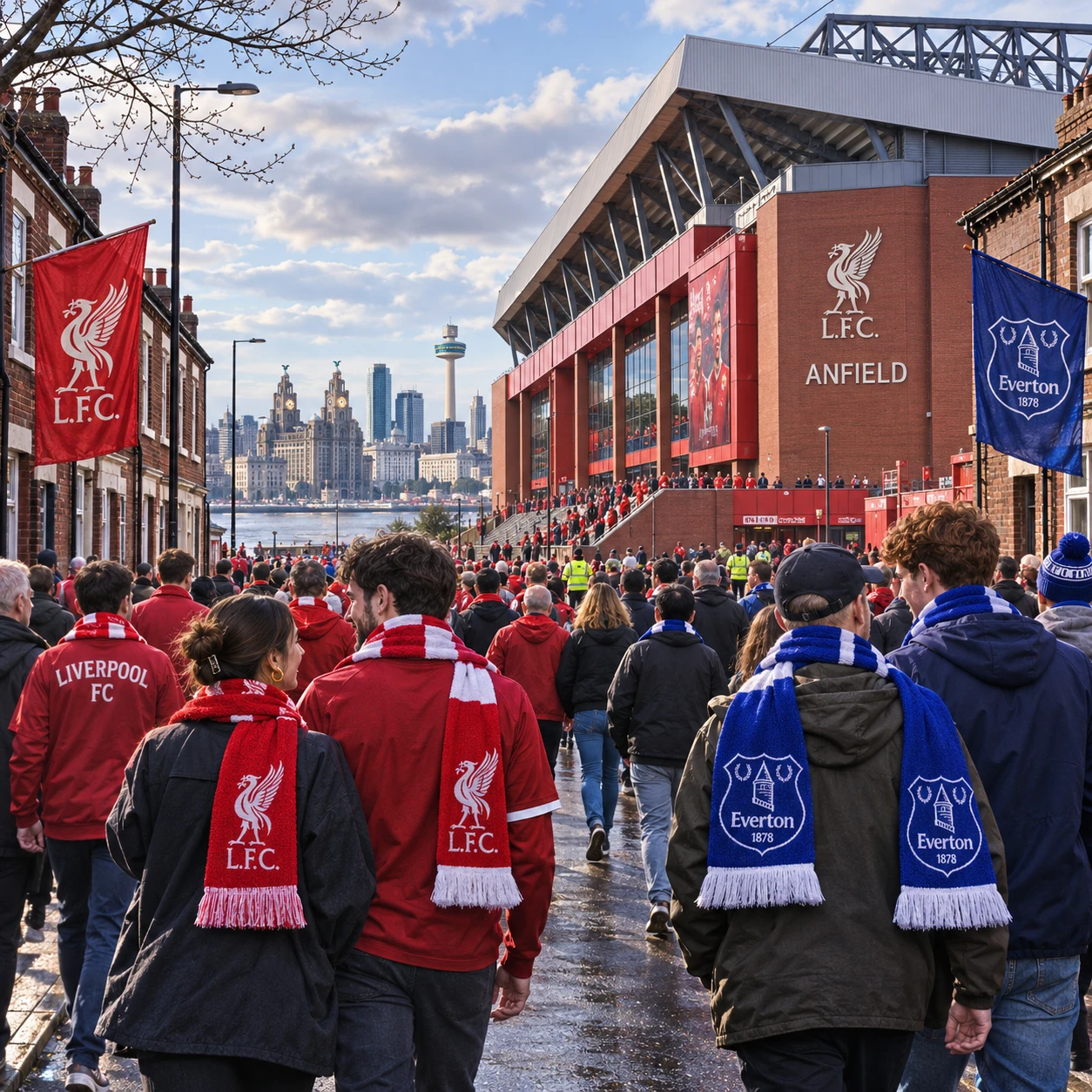
For one weekend, conversations across Liverpool turn toward the same question: how will the city’s two major football clubs fare against each other? Liverpool FC and Everton FC meet in the Merseyside Derby, a fixture shaped by geography, generations of family loyalties, and the pride of representing a shared home.
Its reputation can suggest a rivalry built only on hostility. In reality, the derby’s meaning is more layered. The clubs compete fiercely, but their histories and supporters are bound together by the city around them.
What is the Merseyside Derby?
The Merseyside Derby is the football match between Liverpool FC and Everton FC, two clubs based in the city of Liverpool. It is a local rivalry named for Merseyside, the metropolitan county that includes Liverpool.
Both teams play in English football’s league system, and their meetings attract attention well beyond the city. For local supporters, though, the fixture has a particular closeness: the clubs share a home city, so the match is about more than points or a place in the table. It is also a contest over local bragging rights.
The name can be confusing to newcomers. Merseyside is the wider county, while Liverpool is the city at the heart of the rivalry. The derby is not a meeting between separate towns; it is a match between two clubs whose identities developed side by side in the same urban community.
A rivalry shaped by history and geography
The Merseyside Derby grew from the clubs’ long shared history and their close geographic connection in Liverpool. That closeness gives the fixture a distinct character: the teams compete as rivals, yet supporters may live, work, or have family ties in the same neighborhoods.
Everton is the older of the two clubs, while Liverpool FC was formed in 1892 following a split connected to Everton’s use of Anfield. Liverpool then made Anfield its home, and Everton played there before moving to Goodison Park. The grounds became enduring markers of the clubs’ separate identities within one city.
Geography keeps the rivalry personal. In many football derbies, fans travel from one city to another; here, the contest takes place within the same local landscape. Conversations at work, in pubs, and around family tables can continue long after the final whistle. That proximity can intensify the stakes, but it also helps make the derby a shared civic event.
Its character has changed across eras, shaped by league fortunes, players, managers, and stadium developments. Specific results and records shift with every season, so the most reliable way to understand the fixture is through its lasting context: two historic clubs, one city, and generations of supporters who care deeply about both.
Liverpool and Everton: Two clubs, shared roots
Liverpool FC and Everton FC have distinct club identities, but neither can be reduced to a single supporter stereotype. Their fan cultures include people from across Liverpool and beyond, with different family histories, backgrounds, and reasons for choosing a club.
Liverpool supporters often connect the club with its long record of domestic and European competition and the traditions associated with Anfield. Everton supporters draw on their own rich history, deep local roots, and a strong sense of continuity across generations. These are broad themes, not rules about what every fan believes or how every supporter experiences matchday.
There is overlap, too. Some households include both red and blue, and many supporters have friends or relatives on the other side. People may disagree sharply about the result while sharing a neighborhood, a school, or a family celebration. That mixture of rivalry and familiarity is one reason the derby feels different from a feud based on distance or unfamiliarity.
Club loyalty is personal. Some fans inherit it; others choose a team through a memorable match, a player, or a first visit to the ground. The colors and chants mark a difference, but they do not erase the common connection to Liverpool.
What derby day feels like for supporters
Derby day brings anticipation, local pride, and a heightened matchday atmosphere across Liverpool. Supporters follow team news, discuss the likely line-ups, and make plans around the game, often with a familiar mix of confidence and nerves.
At the stadium, chants, flags, scarves, and the sound of a full crowd help create the occasion. The atmosphere varies with the venue, the importance of the match, and what is happening on the pitch. A tense game may feel very different from an open, high-scoring one, and no two derby days are exactly alike.
For someone attending a first match, the best approach is straightforward: check the club’s current entry guidance, arrive with time to spare, and follow instructions from stewards. Respectful support matters. Rival songs and good-natured teasing are part of football culture, but personal abuse or unsafe behavior should not be treated as a tradition.
For many supporters, the day starts long before kick-off. A family meal, a walk toward the ground, or a message to a friend supporting the other club can become part of the ritual. The result matters, of course. So does the experience of sharing the city’s biggest football conversation.
Anfield, Goodison Park, and the changing matchday setting
Anfield and Goodison Park have both played central roles in the Merseyside Derby, though the match venue depends on the fixture and can change over time. Checking the current season’s official club information is the safest way to confirm where a particular game will be played.
Anfield is Liverpool FC’s historic home. Goodison Park was Everton’s home for generations and hosted countless derby meetings. Stadium arrangements are not permanent: clubs may move grounds, update facilities, or alter matchday operations. Historical accounts and old photographs show how the rivalry looked in earlier settings, but they do not necessarily describe the current arrangements.
The ground affects the feel of the occasion. Home supporters bring familiar songs and routines, while visiting fans experience the city and stadium from a different perspective. The capacity, transport plans, ticket rules, and access arrangements can vary, so do not rely on an old match report when planning a visit.
- Before travelling: confirm the venue, kick-off time, and travel advice through official club channels.
- Before buying tickets: use the relevant club’s authorized ticketing information and check its eligibility rules.
- On the day: follow stadium guidance, including any restrictions on bags, entry times, and supporter areas.
Why the derby still matters
The Merseyside Derby still matters because it combines local bragging rights with the history and identity of two major Liverpool clubs. A league position may change, but the local connection gives each meeting a significance that supporters recognize immediately.
For players, the fixture offers a chance to perform in a match watched closely by their own community. For supporters, it can become a marker in a season: a result to celebrate, a setback to debate, or a memory to revisit years later. The derby also brings the city’s football story to a wider audience, showing how two clubs can share a home while maintaining distinct traditions.
Rivalry does not mean every interaction is hostile. The intensity is real, but so is the shared context. Liverpool and Everton supporters may argue over form and results, then meet again in the same workplaces, families, and streets. That everyday closeness gives the fixture emotional weight without requiring a simplistic story of permanent animosity.
How to follow the derby as a supporter
To follow the Merseyside Derby, check the official Liverpool FC and Everton FC channels for fixture updates, ticket details, stadium guidance, and broadcast information. These details can change during a season, so confirm them close to matchday.
If you are new to the fixture, start with the club histories and the local geography. Learn where the match is being played, which side is at home, and what supporters mean when they talk about the derby. You do not need to memorize old results to appreciate why the occasion matters.
For live updates, use an authorized broadcaster or the clubs’ official match coverage in your region. If you plan to attend, buy tickets through official channels and check travel and entry advice before setting out. Demand and availability vary, especially for high-profile matches.
A useful way to read the fixture is through three lenses: the football contest, the city’s shared history, and the individual supporter’s experience. Keeping all three in view makes Liverpool vs. Everton easier to understand, whether you are watching from the stands, at home, or alongside friends who support the other side.
Why is Liverpool vs. Everton called the Merseyside Derby?
It is called the Merseyside Derby because Liverpool FC and Everton FC are based in Liverpool, within the county of Merseyside. The name describes a local football rivalry between the city’s two clubs.
Are Liverpool and Everton both based in Liverpool?
Yes. Both clubs are based in the city of Liverpool, although their stadium arrangements and matchday details can change over time.
How are the clubs’ supporter cultures different?
Each club has its own history, traditions, colors, and matchday rituals. Supporters are diverse, however, and the clubs also share a deep connection to the same city and local community.
Where is the derby played?
The venue depends on which club is the home team and on the current stadium arrangements. Anfield and Goodison Park are historic grounds associated with the rivalry; check official club information for the venue of a specific fixture.