Analysis of Liverpool’s Most Iconic Matches: Moments That Defined the Club
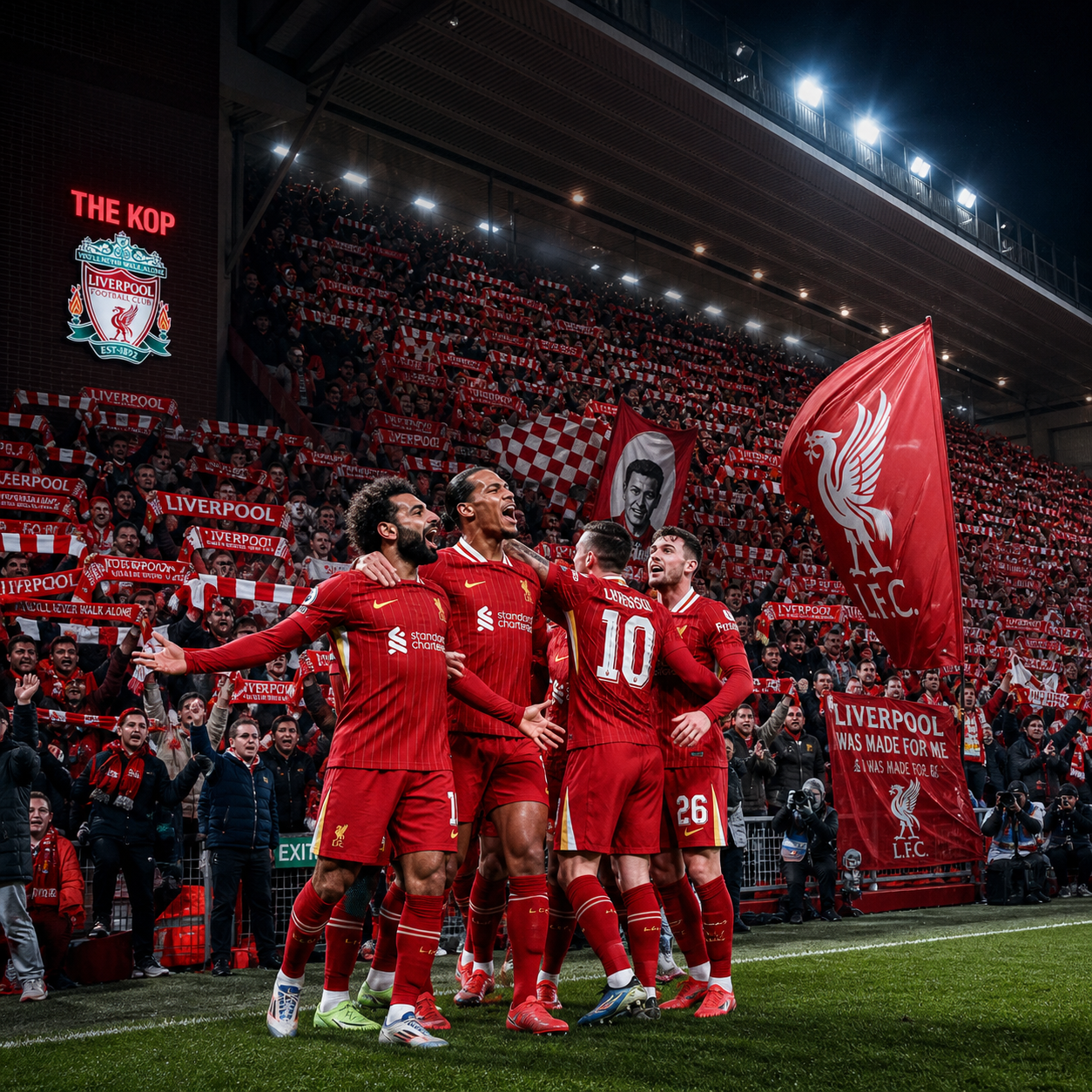
Liverpool FC’s history cannot be measured by trophies alone. Its most important matches are remembered because they changed expectations, strengthened a generation’s identity, or gave Liverpool supporters a story to carry for decades. European finals, improbable comebacks, FA Cup triumphs, Premier League title moments, and intense Merseyside derbies all reveal different sides of the club.
This analysis uses five tests to assess what makes a match iconic: historical importance, emotional intensity, tactical or psychological significance, individual performances, and lasting supporter legacy. The result is not an objective ranking. A supporter who experienced Istanbul may choose a different defining match from someone whose Liverpool memories began with the modern Premier League era.
What Makes a Liverpool Match Iconic?
A Liverpool match becomes iconic when its result carries meaning beyond the final whistle. Historical stakes, emotional pressure, tactical turning points, outstanding players, and the memory created among supporters combine to give the fixture a permanent place in club history.
The first factor is consequence. A European Cup or UEFA Champions League final naturally carries greater historical weight than an ordinary league fixture, although a title-deciding Premier League match can become equally important. The 1984 European Cup final against Roma, for example, confirmed Liverpool’s authority in Europe, while the 2020 title-winning campaign completed a much longer journey for the modern club.
The second is emotional range. Iconic Liverpool matches often move from despair to belief, or from nervous tension to overwhelming relief. Supporters remember how the match felt: the silence after a conceded goal, the surge after an equaliser, and the collective release when victory finally became certain.
Finally, the match must leave a usable story. Bill Shankly’s Liverpool built a culture in which performance and belonging were closely connected. That tradition helps explain why supporters still discuss formations, goals, saves, decisions, and atmosphere as parts of one shared experience rather than isolated incidents.
European Nights That Built Liverpool’s Reputation
Liverpool’s European reputation was built through matches in which the team managed pressure better than its opponents, often combining disciplined structure with an atmosphere that made every turning point feel larger. The 1977 and 1984 European Cup finals, the 2005 final in Istanbul, and the 2019 UEFA Champions League final represent different stages of that development.
The 1977 European Cup final against Borussia Mönchengladbach was significant because it announced Liverpool as a continental power. Bob Paisley’s side handled a demanding opponent with a practical balance between defensive organisation and direct attacking play. The victory marked the beginning of a period in which Liverpool no longer viewed European competition as an occasional adventure; it became a central part of the club’s identity.
Seven years later, Liverpool’s victory over Roma at the Stadio Olimpico showed another quality: composure in an intimidating setting. Bruce Grobbelaar’s unusual penalty-shootout behaviour is remembered vividly, but the deeper achievement was the team’s control of pressure across 120 minutes. The occasion also demonstrated how a squad shaped by domestic competition could manage a final where the emotional stakes were enormous.
Istanbul in 2005 remains the clearest example of Liverpool’s European mythology. AC Milan appeared to have the final under control at half-time, yet Liverpool changed the match by raising the defensive line, increasing pressure in midfield, and attacking with greater urgency. Steven Gerrard’s header supplied belief; Vladimir Smicer’s strike added momentum; Xabi Alonso’s follow-up after his saved penalty completed the transformation. Jerzy Dudek’s shootout save then turned revival into history.
The 2019 final against Tottenham Hotspur offered a contrast. Liverpool did not need a comeback. The early penalty gave Jürgen Klopp’s team control of the match’s emotional tempo, while the defensive line and midfield work limited Tottenham’s opportunities. Divock Origi’s late goal provided the decisive moment. The final mattered because it converted years of progress, pressing football, and near misses into a sixth European Cup.
For further historical context, the record of Liverpool in international football shows how these individual nights fit into a much broader continental story.
The Greatest Liverpool Comebacks
Liverpool’s greatest comebacks happen when belief changes the match’s tempo. Tactical adjustments, aggressive substitutions, renewed crowd energy, and the players’ willingness to attack together can turn a seemingly settled contest into a contest of nerve.
Istanbul is the obvious reference point, but the 2019 semi-final against Barcelona at Anfield may be the purest example of the club’s comeback identity. Liverpool began the second leg needing to overturn a substantial deficit, and the task became harder when Mohamed Salah and Roberto Firmino were unavailable. Klopp responded with a front line built around Sadio Mané and Divock Origi, while the midfield pressed Barcelona’s build-up relentlessly.
The turning point was collective rather than individual. Liverpool’s full-backs, Trent Alexander-Arnold and Andrew Robertson, kept attacking despite the risk of leaving space behind them. Georginio Wijnaldum’s introduction changed the match’s energy, and his two quick goals shifted Barcelona from confident control to uncertainty. Origi’s fourth goal, scored from an alert corner routine, showed the value of concentration as much as technique.
These matches reveal a useful framework: belief needs structure. Crowd noise alone cannot create a comeback. The team must identify where the opponent is vulnerable, shorten the distance between its lines, and take risks in a coordinated way. The trade-off is clear: attacking with more players creates chances but also exposes the defence. Liverpool’s best recoveries worked because urgency did not completely replace organisation.
Anfield matters here, but it should not be romanticised as an automatic advantage. The supporters can raise intensity and pressure, yet players must respond with clear decisions. The relationship is interactive: the team gives the crowd evidence of possibility, and the crowd amplifies every sign that the match is turning.
Domestic Finals and Matches That Delivered Trophies
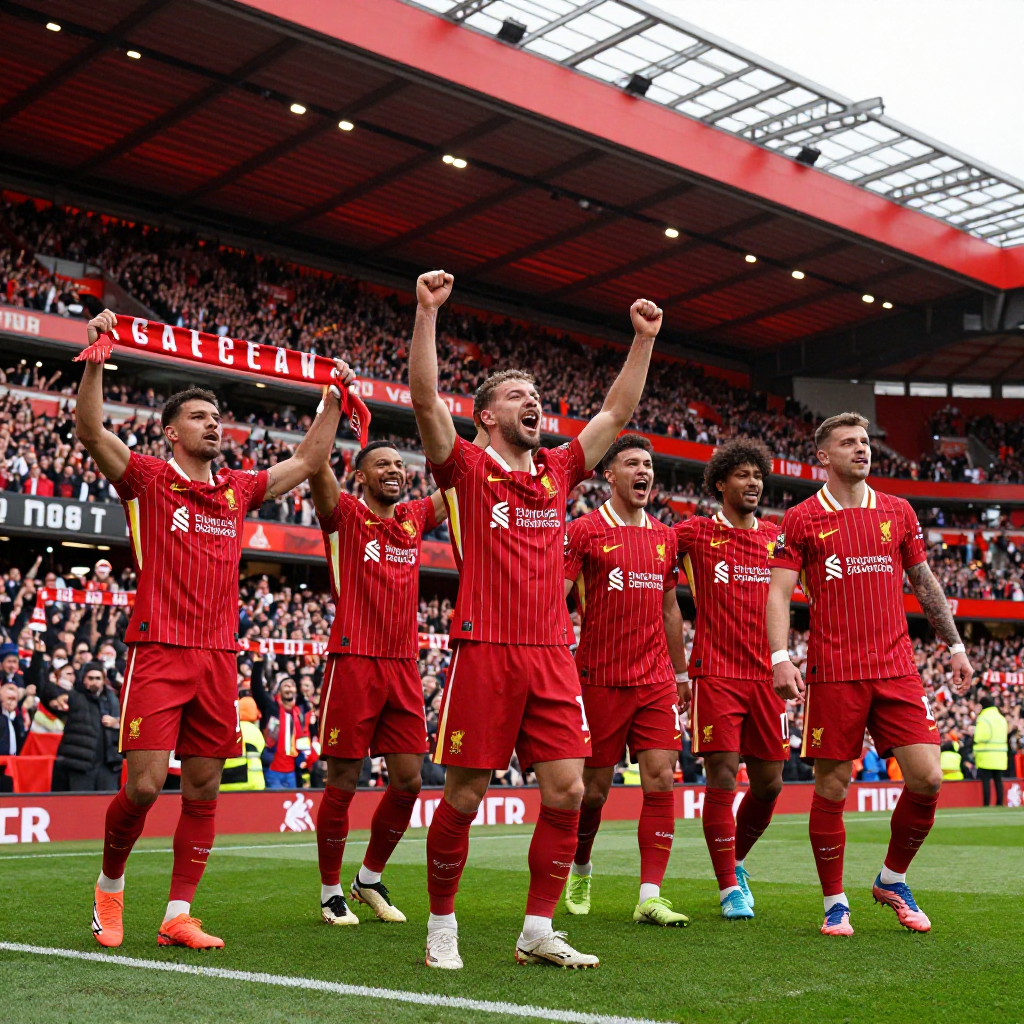
Domestic finals become iconic when they deliver a trophy, settle a long campaign, or establish a new Liverpool era. FA Cup finals, League Cup finals, and Premier League title-defining fixtures each carry different pressures, from one-off preparation to the endurance of a season-long race.
The 1986 FA Cup final against Everton remains especially powerful because it combined silverware with local rivalry. Liverpool had already won the league, but defeating Everton at Wembley gave the achievement added emotional force. Ian Rush’s decisive contribution reflected a broader strength of that side: it could absorb pressure, exploit defensive gaps, and make high-stakes moments look familiar.
The 2001 FA Cup final against Arsenal illustrates a different kind of final. Arsenal controlled much of the match and looked likely to win, yet Michael Owen produced two late goals through movement, finishing, and ruthless timing. Liverpool’s victory showed that a final can be decided by a short period of individual excellence even when the overall performance is uneven.
More recently, the 2022 FA Cup and League Cup finals against Chelsea were defined by defensive discipline and penalty-shootout nerve. Neither match offered constant attacking spectacle. Their importance came from concentration, tactical patience, and the ability to execute under fatigue. Choosing control over open football can win a trophy, although it may leave supporters with a less immediately dramatic memory.
The Premier League era added a different category of iconic match: title-defining pressure. Liverpool’s 4–0 victory over Barcelona was European rather than domestic, but the 2019–20 title campaign gave supporters the culmination they had waited for. The significance lay across many matches, including narrow wins and demanding away fixtures. A league title is built through repetition; its most memorable moments gain meaning from the accumulation behind them.
Merseyside Derbies and Matches Shaped by Rivalry
Merseyside derby matches are iconic because Liverpool and Everton compete for local pride as well as league points. The rivalry creates unusual emotional pressure, yet the most memorable derbies also depend on tactical discipline, defensive concentration, and the ability to manage atmosphere.
The 1989 FA Cup final replay, won by Liverpool against Everton, carried the weight of a city recovering from tragedy. The match is remembered through the emotion surrounding Hillsborough and the solidarity of Merseyside, as well as through Ian Rush’s decisive performance. Its significance cannot be separated from the community context in which it was played.
Derbies often resist normal form. A team leading the table may struggle against an opponent fighting for survival, while a single challenge, set piece, or goalkeeping error can alter the entire mood. Liverpool’s memorable derby victories have frequently combined attacking quality with a willingness to win the second balls and physical contests that define local games.
For Liverpool supporters, the derby is also a measure of identity. It is close enough to feel personal, but important enough to affect a season. That combination makes the fixture different from a European tie: the opponent is not distant or exotic. The rivalry is part of the city’s weekly life, which is why a derby win can be discussed at work, in families, and in supporter gatherings long after the result.
Players, Managers, and Tactical Turning Points
Iconic Liverpool matches are shaped by figures who convert pressure into decisions. Managers provide the plan, players execute or adapt it, and the most remembered moments usually emerge when preparation meets improvisation.
Bill Shankly established the cultural foundations of modern Liverpool, while Bob Paisley refined a winning model built on technical quality, intelligent movement, and calm control. Later, Rafael Benítez brought detailed European preparation, and Jürgen Klopp added aggressive pressing, rapid transitions, and a powerful emotional connection between team and supporters.
Key players have fulfilled different roles. Kenny Dalglish represented intelligence and creative leadership. Ian Rush supplied movement and finishing in major finals. Steven Gerrard repeatedly changed matches through driving runs and long-range quality. Jamie Carragher embodied defensive commitment, while Alisson Becker’s saves and calm distribution strengthened Liverpool’s modern foundation. Mohamed Salah, Sadio Mané, Roberto Firmino, Trent Alexander-Arnold, and Virgil van Dijk each contributed distinctive qualities to the club’s recent European and Premier League success.
The most useful way to analyse a tactical turning point is to ask three questions:
- Where did Liverpool create numerical superiority? This might occur in midfield, on the flank, or during a pressing trap.
- What changed the opponent’s decisions? A goal, substitution, or increased pressure can make a confident team hesitate.
- What risk did Liverpool accept? A higher defensive line and more attacking players create opportunities, but they demand recovery speed and communication.
This approach avoids reducing football to a single heroic moment. The goal may be remembered forever, but the conditions that made it possible usually involved positioning, preparation, and several players performing their jobs at once.
The Lasting Legacy Among Liverpool Supporters
Liverpool’s iconic matches endure because supporters turn football events into shared cultural memory. Songs, anniversaries, repeated broadcasts, match-day conversations, and Anfield traditions keep the meaning of these games active across generations.
The Kop has always been central to that process. Its atmosphere can make a European night feel like a community event, but its deeper role is symbolic: it represents continuity between different teams, managers, and eras. A supporter who never saw the 1977 European Cup final can still inherit its importance through family stories and club history.
Supporters’ clubs add another layer. Members may come from different countries, generations, and football backgrounds, yet an iconic match gives them a common reference point. Istanbul, the Barcelona comeback, the 1986 FA Cup final, and title-winning moments function almost like chapters in a shared language.
There are also dangers in simplifying the past. Treating every famous match as proof that Liverpool always wins through magic can obscure tactical work, luck, mistakes, and the quality of the opposition. A stronger supporter culture remembers the emotion while still asking why the match turned. That balance keeps club history alive rather than turning it into nostalgia alone.
Frequently Asked Questions
What is Liverpool’s most iconic match?
The 2005 UEFA Champions League final against AC Milan is the strongest single candidate because it combined a major European final, a dramatic comeback, individual heroics, and a legendary penalty shootout. Many supporters may instead choose the 2019 semi-final against Barcelona or a defining domestic final.
Why are Liverpool’s European comebacks so memorable?
They are memorable because they combine high stakes with visible psychological change. Liverpool must recover from adversity while the players, manager, and supporters collectively alter the match’s momentum.
How important is Anfield to Liverpool’s biggest victories?
Anfield is important because its crowd can increase intensity and encourage brave attacking decisions. It is an influence rather than a guarantee: the team still needs tactical clarity, physical quality, and composure.
Which players are most associated with Liverpool’s iconic matches?
Steven Gerrard, Kenny Dalglish, Ian Rush, Jamie Carragher, Mohamed Salah, Sadio Mané, Roberto Firmino, Trent Alexander-Arnold, Virgil van Dijk, Alisson Becker, and Divock Origi are strongly associated with landmark matches across different eras.
What makes a match part of Liverpool’s club history?
A match enters club history when its stakes, performance, emotional impact, and lasting supporter memory extend beyond the result. Trophies matter, but so do turning points that change how Liverpool sees itself.
Liverpool’s most iconic matches cannot be reduced to one definitive list. European glory, domestic finals, Merseyside derbies, and extraordinary comebacks each express a different part of the club’s character. What connects them is the relationship between pressure, performance, and supporters. Long after the scoreline fades, the match remains because it explains something about Liverpool FC and the people who follow it.